Internal investigations and fraud
Connect people, transactions and third parties to examine potential conflicts of interest, irregularities or patterns requiring review.
 Yappari
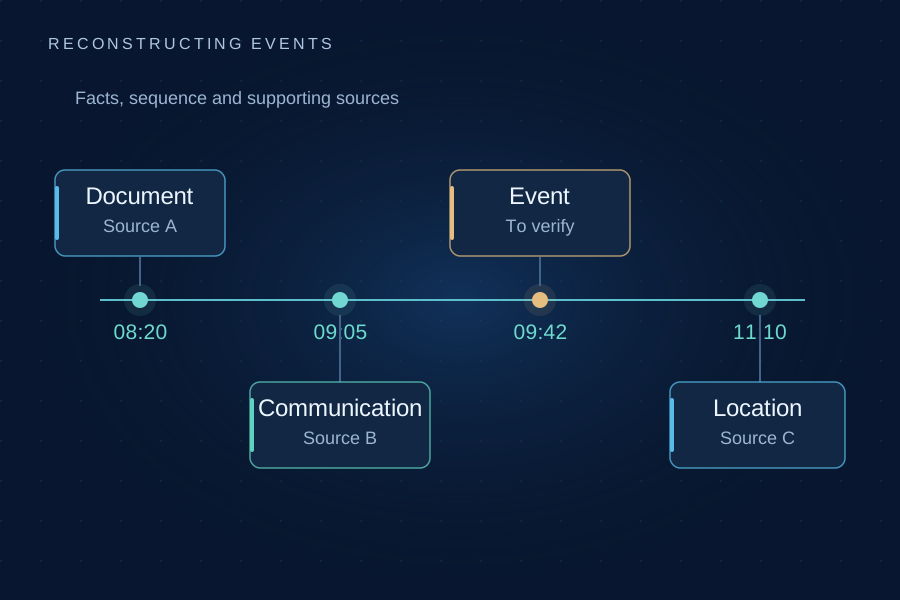
Organise people, documents, communications and events into an understandable case. Explore relationships and sequences while retaining the sources that support them.
Connect people, transactions and third parties to examine potential conflicts of interest, irregularities or patterns requiring review.
Order events in time and place relevant locations on the map. Compare sequences of activity and the accounts available.
Link documentation to the case. Distinguish supported information, relationships awaiting verification and the analyst’s interpretations.
An investigation requires connecting facts to people and to the evidence that helps interpret them.
Combine relationships, time and geography. Use views and annotations to communicate the sequence of events and preserve the basis of the analysis.
The chart helps organise the investigation and explain the reasoning. A represented connection should be interpreted alongside its source, context and level of verification.
If you have a question about Yappari or its application to your professional context, you can write to us.

